Third Sunday of Lent Homily 24mar25 – Grain of Wheat Church-Community

– as usual for these homily posts I edited to try and include what I said but I’ve forgotten most of the off script, spontaneous things I said obviously aren’t included. If you want to watch the service on YouTube contact GoWC-C  (http://www.grainofwheat.ca/).  I added bracketed, italic comments for clarity…I hope.

Scriptures for the day – Genesis 3:8-21; Psalm 96; Romans 8:31-39; Mark 13:14-22

Morning. Please pray with me in silence that Spirit will help my words be true, healing and helpful.

These are wonderful and challenging passages from the Bible both the Hebrew and more recent Christian scriptures. I wondered all week what Spirit wanted you all to hear…what I could say about them. Gafney, the translator and writer of the lectionary we’re using has good things to say, which I could repeat. I found a great articles on Genesis 3:16 – the Woman’s Curse. (https://philarchive.org/rec/DOUTWC). I thot about just reading those last verses of Romans – who can separate us from the Love of Christ…not death, not life, and sit down…that’s more than enough to ponder.  The whole 13th chapter of Mark is a good Lenten passage. Full of doom and gloom, especially for followers of Jesus way especially – another gospel writer warning of false messiahs. Our reading was the conclusion of what Mark wanted us to hear Jesus say just before the last few days of his life. It concludes with reminding us  to stay awake cause you never know when the Son of Man will come in glory…  Pay attention to what’s happening…

Interestingly that’s sort of what I finally heard as my subject for this homily – Pay attention. focus on what is most important … at least for me … in these passages. The Psalm highlighted this. 

READ PSALM 96;12&13 FROM GAFNEY

(This is what I read. I’d put it in more poetic form here but the blog editor isn’t cooperating today. )

12. Let the field, exalt, and all that is in it. Then shall all the trees of the forest, sing for joy before the WISDOM OF THE AGES; for she is coming, so she is coming to judge the earth. She will judge the world with righteousness, and the peoples with her truth.

(p.82, Wilda C. Gafney, A Women’s Lectionary for the Whole Church: A Multi-Gospel Single-Year Lectionary, Church Publishing Inc. 2021. The caps for the different names of God are included in Gafney’s translation of the Psalms.)

What stood out for you as I read these last verses of Psalm 96 – I couldn’t help but notice all the she pronouns… If I read the whole psalm again I think the pronouns would stand out even more, now I’ve mentioned them. 

Here’s a familiar version – Let the field be joyful, and all that is therein; then shall all the trees of the wood rejoice; Before the LORD: for he cometh to judge the earth: he shall judge the world with righteousness, and the people with his truth.

Where am I going with this? I don’t really want to talk about what’s the best pronoun to use for God. it’s sort of interesting stuff, nerdy, wordy stuff – but it’s not really what I feel I’m to share with you this morning. If you want to talk about that stuff, come over for coffee sometime. It is really very easy to get distracted – by good things and by hard things, gender inequality, climate crisis, wars, politics… Throw in a few false prophets and it can get crazy making… And like Larry said last Sunday “Do not fear.” Do not fear is a great thing to hear…

And this morning – this Lord’s day – I’m thinking that what’s even better that hearing “do not fear” – is being aware, paying attention to who said it. Jesus our Lord…who’s table we’re coming to…who showed us, in his life and how he died where we need to look for courage and hope and peace. Even death couldn’t take away his hope…and his resurrection proved him right. There is hope for us too.

PAUSE… (I write this in my script so I take a breathe…it’s a bit dramatic but giving a homily is sort of theatre in a good way)

When I asked Spirit what to talk about this morning I heard that I, Stephen Murphy, was to pay attention to whom the Scriptures were about. I was reminded why we gather Sunday mornings…who we are worshipping. Who we are looking to for help from our fear. Who gives us the peace that passes understanding that the world and politicians can’t really give us and they can’t really take the Peace of Christ away. We gather over and over on Sunday, the day we remember Jesus resurrection the Lord’s day, a day to celebrate our Christian faith with millions of people of religious faith around the world…in Gaza, Ukraine, Ethiopia, Yemen. (Not sure why but when I said the names of the various countries I choked up for a moment?) To remind ourselves of the Light of Christ … in the middle of the darkness of Lent, of war, of uncertainty. The Light and Love of Christ shines in the darkness and nothing can put it out. Nothing can separate us from that Love and Light. Thanks be to Love.

This morning I’m to remind myself and hopefully you all to keep an eye on the subject of the scriptures, the inspiration for these words and stories – not as much the scriptures themselves, as important as they are, or even the lectionary we use but one the subject of those words … Sort of like the finger pointing at the moon…don’t get distracted by the finger…stay focused on what it’s pointing to. Pay attention to what / whom the writers were writing about…

Remember when I read that verse from Psalm 96 and how I was distracted by the pronouns…It can be easy to miss the wonderful naming of the LORD – Gafney uses – WISDOM OF THE AGES – It’s one of the 11 words she uses in this psalm for God’s unpronounceable Most Holy Name. If you look closely at your Bible at home or on your phone, no matter the translation you see LORD in capitals – that’s the word, the way most translators represent the original Hebrew letters YHWH. The Name that most religious Jews don’t use or even write. “the Name” is often a substitute for rabbis – Elohim, G-d.

Gafney gives us 11 substitutes in this one Psalm – she includes a list of over 120 names of God in our lectionary. Different ways of saying something about that which is beyond speech and understanding, helping us gain more understanding of the subject of the psalm. 

PAUSE

Sing to the EXALTED; sing to the CREATOR; great is the AGELESS GOD; the WOMB OF LIFE made the heavens; give to the MAJESTIC ONE, THE MIGHTY ONE; the FIRE OF SIANAI the glory due her name; the EVER-LIVING GOD reigns; the WISDOM OF THE AGES is coming

(I was going to include Nan C. Merrill, Psalms for Praying paraphrase of Psalm 96 as well but for time’s sake didn’t.)

I don’t know about you but hearing all these Names of God, ways of describing God, LOVE DIVINE – my souls feels fuller, full of something … some kind of presence maybe … there aren’t really words for that feeling, that emotion – it’s beyond speech and understanding …

and I want to stop talking and just rest in that awareness of something beyond me that somehow supports and sustains me no matter what the distractions all around me are. That’s why I try and spend at least 20 minutes a day in contemplative prayer – just sitting in silence, in THE silence. Silence with the presence – in which I live and move and have my being. 

Let’s do that now for at least 10. If you need to be doing something that’s alright, each of us comes to silence in different ways. No right or wrong. Maybe take one of those names and meditate on it – why it seems to mean something for you – how does it connect with your life. Draw something that represents it. Maybe today is the day you just sit quietly in the presence of Love for 10 mins and use that name to gently remind your mind that for these 10 mins I’m just going to sit in the presence, like a flower turning towards the sun. Blessings on your time of silence.

Tatiana will time our 10 minutes. (As part of GoWC-C Lenten Sunday service we conclude each homily with 10 minutes of silence.)

Posted in Uncategorized | Tagged , , , , | Leave a comment

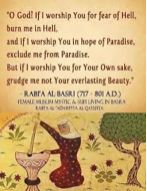
on pilgrimage with Rabia of Basra

“Rabia of Basra (c.717-801) is without doubt the most popular and influential of female Islamic saints and a central figure in the Sufi tradition. She was born nearly 500 years before Rumi, and, although it’s rarely said, she, perhaps, more than any other poet, influenced his writings.” (Daniel Ladinsky, Love Poems from God: Twelve Sacred Voices from the Rast and West, Penguin Compass, 2002, p.1)

At the end of last year I was invited to read her poems and was caught by a line from the 7th poem by Rabia which Ladinsky includes in her section of his wonderful book.

THE SKY GAVE ME ITS HEART

The sky gave me its heart

because it knew mine was not large enough to care

for the earth the way

it did.

Why is it we think of God so much? 

Why is there so much talk about love?

When an animal is wounded

no one has to tell it “You need to heal” so naturally it will nurse

itself the best it can.

My eye kept telling me, “Something is missing from

all I see.” So it went in search of the cure.

The cure for me was His Beauty the remedy—

for me was to

love.

“The sky gave me its heart / because it knew mine was not large enough to care / for the earth the way / it did”. I stopped at the first stanza because of the grace I recognized I needed in those words. Most Sunday worships at my faith community Grain of Wheat Church-Community we have a moment to reflect on caring for creation. While I appreciate those reminders I have wondered if we need to hear so much about it. My heart needs to be enlarged…in a good way. I remember asking “Oh Love give me your heart” that morning. My journal entry included “Sure could use some of that contented happiness right now, today, and being unsettled, in desolation gives a focus – intentionally turning to light…sacred heart of Jesus is burning in me and I need it’s warmth and light…Love gave me her heart… prone to leave the God I love…take my heart and seal it…” “Love gave me her heart” is quite a bold statement and somehow it’s true. It wasn’t / isn’t a grand change in emotion or action but I sense the potential to care better is now present in me and that’s encouraging, to say the least. And the grace to ask and to believe my prayer was answered is a gift from Love. I’m at peace (see Word of 2025 blog, when it’s up) and ready to act when needed – that’s my story and I’m sticking to it.

As I think more about “Love giving me her heart” I suppose that being loved by Love has somehow already imbued me with her heart. We live and move and have our being in the heart of Love. And there’s something about the asking that makes it even more real. An incarnational worldview suggests “Matter and Spirit reveal and manifest each other.” https://cac.org/daily-meditations/an-incarnational-worldview-unites-matter-and-spirit/ The older I get the less I enjoy those mind experiments that kept me intrigued for hours. I believe that ideals can become real. Wooden boys want to be real boys. Hopes and dreams can to be more than just inspiration. (sadly MLKjr.’s dream is taking a long, long time; many steps forward, and some steps back) And dreams endure, bring hope and healing … and now I’m wandering, not lost just wandering. Thanks Love, for your loving heart to do what I can and keep looking and asking for healing, which Love is more than willing to give, her way.

Thanks Rabia for encouraging me to dare to believe that Love can give me her heart so I can be a loving, healing presence in this wonderfully wild world. When I read / listen to Rabias poemsI often smiled and sometimes was shocked at her familiarity with God. I learned things and was challenged. My soul’s longing or connection with her experience of Love often welled up as tears. I found myself drawn into their mystical love relationship…thanks Rabia. I’ve found another companion to listen to on my pilgrimage.

Posted in Uncategorized | Leave a comment

Epiphany Sunday Homily – 5jan25 – Grain of Wheat Church-Community

– I edited to moderate some of the casual talking points but left it pretty much what I wrote and spoke on Sunday 5jan25. The off script, spontaneous things I said obviously aren’t included. If you want to watch the service on YouTube contact GoWC-C  (http://www.grainofwheat.ca/).  I added bracketed, italic comments for clarity…I hope.

I feel honoured to be the first homilist in 2025. Today is when the church celebrates Sunday revelation of Jesus incarnate love to Gentiles – Epiphany Sunday – According to Merriam-Webster dictionary – January 6 is observed as a church festival in commemoration of the coming of the Magi as the first manifestation of Christ to the Gentiles; an epiphany is an appearance or manifestation especially of a divine being: a usually sudden manifestation or perception of the essential nature or meaning of something: an intuitive grasp of reality through something (such as an event) usually simple and striking: an illuminating discovery, realization, or disclosure.

In the first chapters of Matthew, he introduces Jesus and who he was to a primarily Jewish audience. I like to think Matthew introduces us to Incarnate Love – God enfleshed – among us.

We really don’t understand the radical idea of what we heard from Rachel last Sunday about the how genealogy of Jesus includes women, foreign sex workers and a woman who used seduction to get married into the family and becomes King David’s great great great grandma. All relations of Jesus. His family tree.

Today Matthews continues his introduction to Jesus, Incarnate love by saying even male foreigners… from a different religion – they were probably Zoroastrian priests – all these folk are part of Jesus story.

As I reflected on the story this week in preparation for this homily, I was listening to some songs for inspiration and decided to share with you what I heard in those songs. I’ll start with Bruce Cockburn’s – Cry Of A Tiny Babe – from his – Nothing but a Burning Light album. (I’ve put links to songs and lyrics – from no particular site – at bottom of this blog)

Part of what Bruce sings is: “The child is born in the fullness of time / Three wise astrologers take note of the signs / Come to pay their respects to the fragile little king / Get pretty close to wrecking everything / ‘Cause the governing body of the whole [Holy] land / Is that of Herod, a paranoid man.”

(I think I made some comment about present day leaders of Holy Land and other places being paranoid and killing or putting children in cages … if I didn’t I know I had it in another version.)

“There are others who know about this miracle birth / The humblest of people catch a glimpse of their worth / For it isn’t to the palace that the Christ child comes / But to shepherds and street people, hookers and bums / And the message is clear if you’ve got ears to hear / That forgiveness is given for your guilt and your fear / It’s a Christmas gift you don’t have to buy / There’s a future shining in a baby’s eyes.”

I believe Matthew was making the same point for his Jewish readers – that the revelation of incarnate love was for everyone. Matthew wanted those first readers to know that Jesus was teaching and living a new way of understanding how God / Yahweh is working in the world …everyone is part of that story – no matter who you are.

In a few minutes we’re going to come to the table of Christ and as you’ve heard every Sunday – all are welcome whatever stage of faith you are or whatever your sexual orientation AND … dare I say, it doesn’t matter what religion you identify with. All are welcome at the table of Incarnate Love.

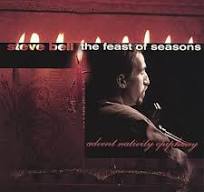
I also heard in Steve Bell and Jamie Howison’s lyrics in Old Sage / Home Again – from Steve’s Feast of Seasons album: “It was something ‘bout that boy in Bethlehem / I will never be the same.”

This spoke to me that the encounter with Jesus as Divine Incarnate Love – as a boy – changed something for these wise men. Something about the experience of being in the presence of Incarnate Love was an epiphany for them – an intuitive grasp of a reality that they didn’t know before. Something they hadn’t thought of, despite all their study.

Those words reassured me that Jesus the Christ, Incarnate Love, somehow brings hope to hopeless situations, they don’t remain the same. Matthew says the Story of Jesus tells us that there can be redemption / hope that even paranoid rulers can’t destroy. In my life it’s hope despite depression. Maybe for you it’s hope despite war and killing of children. Hope despite all the murdered and missing women. Maybe hope despite the environmental disaster we’re in. Hope for family tensions. Whatever you’re dealing with – an encounter / experience of Divine Love – changes how you deal with it. Rather than raging against the darkness you have the courage, wisdom and strength to go into the darkness with Incarnate Love by your side, supporting and encouraging you and that somehow changes the darkness. A Christmas miracle that you don’t have to buy.

I really wanted you to hear Anais Mitchell’s Song of the Magi – and Larry graciously agreed to learn it. The Good Lovelies do a wonderful cover version of this, please listen today. Thanks Larry for your version. (Larry did a wonderful version of this song that was very moving, accomplishing what I had hoped – sometimes taking a risk – including a song in the homily – works out … thanks be to Love. I had more written words to say after Larry sang but it was so moving that I ended with only these ones – after a good moment of silence. When I listened to it again to check the link, tears still came to my eyes.)

And she so loved the world. Every one, everything is loved. And that love softens the darkness. There was something ‘bout that boy in Bethlehem – that encounter with Divine Incarnate love – you’ll never be the same. There’s a future SHINING in a baby’s eyes. It’s a Christmas present that you don’t have to buy. Thanks be to LOVE. AMEN.

___________________

Bruce Cockburn singing – Cry Of A Tiny Babe – from album – Nothing but a Burning Light https://youtu.be/mRZxrr4P9FE?si=GS8zrMAMNCfJNd4M

Lyrics – https://cockburnproject.net/songs&music/coatb.html

Steve Bell singing Old Sage / Home Again – from album Feast of Seasons – https://youtu.be/9g5A-Jp_lao?si=qLsJ1GVjCb8DTYHT

Lyrics – https://www.broadjam.com/songs/stevebell/home-again-old-sage?srsltid=AfmBOooIeg0TDOzH19Cf11V7keogJj919fyoKuHer4tCFsFkHf5ljD7u

Good Lovelies singing Anais Mitchell’s – Song of the Magi – from their album – Evergreen: https://youtu.be/L4nrMkdarvE?si=qr6LudtJaDJCWD1B

Lyrics – https://genius.com/Anais-mitchell-song-of-the-magi-lyrics

Posted in Uncategorized | Leave a comment

I am a stronghold

Lectio Divina – Wednesday 6nov24 – Scripture Reading

Psalm 9:9 The LORD is a stronghold for the oppressed, a stronghold in times of trouble.

Lectio – words that stood out for me at first reading

– stronghold / refuge (NRSV)

Meditatio – personal application

– I’m safe in a stronghold. Safe from outside things. Yeah. And I’m still me with my inside enemies? Or am I totally okay and it’s only outside things I let in that are harmful? Hmmmm

As usual my meditation is stifled by having to acknowledge that Psalm 9 has stuff in it that I have trouble with – The wicked shall depart to Sheol, all the nations that forget God. And I wondered if the writer was warning us about the USA – The nations have sunk in the pit that they made; in the net that they hid has their own foot been caught. The LORD has made himself known, he has executed judgment; the wicked are snared in the work of their own hands. And despite my wondering about the psalmist’s theology and what suffering the influence of the 47th president will cause I was almost surprised that vs. 9 caught my eye, heart and soul in that familiar Lectio Divina invitation … “meditate on these words’’: The LORD is a stronghold for the oppressed, a stronghold in times of trouble” and ignore the rest – for now. Distractions, distractions.

The LORD is a stronghold for the oppressed, a stronghold in times of trouble.

Initially I pictured a stronghold, like the old log forts they build, that keeps out bad things and bad people. Good stuff inside and bad stuff outside. That image made me feel safe from all that outside bad stuff. Being in the stronghold, with the good stuff gave me the impression that somehow I was good too. Which was a bit hard to take because I know how imperfect I am. And maybe Love sees me differently. Maybe James Finely is correct when he says that God is crazy in love with me and my very existence is proof of that. God loves me – just the way I am and thinks I’m OK, dare I say “good” and keeps me safe. Cool.

As I continued to think about being in a stronghold and being part of the goodness of reality which is sustained by Love, I wondered if I could let bad things in. Sometimes the things I watch on TV or read aren’t very life affirming, MI6 and CIA aren’t really Love orientated organizations. I’m pretty sure the violence and deceit I allow into my mind by watching those shows, doesn’t help me love my enemy. So maybe I can let bad things into my fortress of safety and goodness. I can choose to leave the stronghold for some strange reason. While outside the protection of the stronghold I can do bad things which aren’t good for me and get hurt. I might even be trying to good things, outside the protection and bad “things” hurt me. That suffering seemed redemptive. It didn’t seem right  to hide in the stronghold…white privilege and all. Anyway those thoughts were a good reminder to be diligent and aware of what I bring into the stronghold. And if I’m outside I need to keep track of where that stronghold is and stay close. Even if I’m outside for good reasons and bad things happen and I get hurt, I can always go back to the stronghold the Love built for me, for safety and healing. These thoughts were very encouraging and hopeful to my soul. Thanks be to Love. TBTL

Then my meditation then took an interesting turn … which I have to attribute to grace and Love cause I’m not sure my mind would ever go there on it’s own. I was invited to contemplate that maybe I am the safe, good stronghold. I know it’s a bit of leap of logic and because Lectio Divina is listeningwiththeearofmyheart it sounded plausible and maybe even true. I know I was created by Love to love and so maybe I can be a stronghold of love. So as a stronghold I am “safe” from bad things, unless I let them in. That’s pretty cool, if you ask me.

Love then gifted me with the thoughts that no matter what’s happening around me, including growing fascism to the south, I’m safe. Even if I’m oppressed, made fun of or ignored or misunderstood. I’m OK. Even if I suffer because of my own weaknesses, aging or whatever. I’m OK. Even coping with anticipated times of trouble – which are no doubt coming – I’m OK. I can still be loving to immigrants – no matter their religion or skin color. I can love and accept LBGTQ+ folk, even in my faith community. I can respond positively to street folk, to those ignorant of white privilege. No matter what or who comes my way, I am a stronghold, created and sustained by Love. I am OK and can make choices that are for the good of others, no matter my own questions or concerns. Sorta like loving them.

This thinking reminded me what I “heard” from Victor Frankl, writing out of his experience in a Nazi concentration camp in Man’s Search for Meaning, “The experiences of camp life show that man does have a choice of action. … There were enough examples, often of a heroic nature, which proved that apathy could be overcome, irritability suppressed. Man can preserve a vestige of spiritual freedom, of independence of mind, even in such terrible conditions of psychic and physical stress. We who lived in concentration camps can remember the men who walked through the huts comforting others, giving away their last piece of bread. They may have been few in numbers, but they offer sufficient proof that everything can be taken from a man but one thing: the last of the human freedoms – to choose one’s attitude in any given set of circumstances, to choose one’s own way. …. It is this spiritual freedom – which cannot be taken away – that makes life meaningful and purposeful.” p.65-68.

This sounds a bit too good to be true, but such is the love of the Creator. She says I’m a stronghold of love which means I get to choose how I will respond to the troubles and oppression that is all around. That’s encouraging and challenging. Makes life interesting and encourages me that I have something to look forward to, something to offer, even in my 70s. TBTL

Oratorio – prayer

– thank you Love for your continued encouragement that I’m OK and you are looking after me. Thanks that me being OK can contribute some peace and stability to the world which sure needs it. With your help I can be that peace and stability that others need. May I have the courage and awareness to do my part. Help me stay close to you, Love and learn to ignore distractions. Please help me to learn to listenwiththeearofyourheart, which I know will enable me to choose the Jesus / Love way, easier and quicker despite my fears and questions. Thanks.

Contemplatio – Centering prayer

– scriptures from app: Lectionary – Common Worship: Services and Prayers for the Church of England, Church House Publishing, Aimer. NRSV is used for scripture except for Psalms which are translations from 2000 Common Worship psalter.

Posted in Uncategorized | Leave a comment

Choosing…

I once read how white privilege includes being able to choose what news I do or don’t watch or read. I understand that statement as highlighting how my life feels comfortable because I can choose to ignore the tragedies and injustice happening around the world or the city where I live and only watch Netflix and only read Thomas Merton…but only his contemplative stuff not his social action commentary – which got him silenced for a while.

I’ve tried to be more intentional about keeping myself aware of world and local issues, including … big sigh… politics, domestic and international…even south of the border. So I watch CBC news, even though some say it’s just a propaganda tool for the gov’t and read the Guardian and Winnipeg Free Press – online (full disclosure – for free). Recently I discovered SubStack (so much good stuff out there) and this morning I read a string of comments about Bezos and the WaPo (I’m so woke) and learned (yes I’m slightly embarrassed that I didn’t know this, full disclosure – I had to check the spelling of his name) that he owned Amazon and is freaking rich. Anyway I also read folk who are calling for a boycott of Amazon in support of freedom of speech and democracy…my interpretation. So, after consulting with Linda (who doesn’t watch much Prime or likes me ordering books anyway) I’m cancelling my Amazon account today. I’ve also decided to ride this moral high ground (to mix my metaphors – I guess if I wrote…ride my white horse on this moral high ground, I’d be combining metaphors…ain’t I witty), hopefully with some humility at being part of questionable social media constructs (continual discernment needed) for so long, … I’m cancelling my Twitter / Z account due to Musk’s questionable way of being. That election is really messing with my life … darn Americans. Sorry about all the (…)s – that internal running commentary is annoying to me too.

A brief sidebar about me and social media – I’m sticking with FaceBook, mainly so when I blog  I can let folk know what I’m thinking and doing – announce my moral high ground in a humble way. As you may have read I’ve thought of cancelling FaceBook too. If I did I’m sure my life wouldn’t change that much, other than missing birthdays of people I don’t connect with. Continuing with FaceBook is primarily a way for this aging, introverted, contemplative, Five energy to stay engaged.

Leaving Amazon & X means I’ll have to pay more for books and some stuff and miss some brilliant comments by many interesting folk. BOO HOO And SubStack will provide more than enough spiritual, insightful comments. And I’ll be buying more local and supporting local booksellers, something I want to do more – so it’s a good thing on many levels and I do feel good doing it. All this is still somewhat white privilege and a deep desire to promote justice – so maybe it all works out in the end. And I’m still trying to listen to Love. Blessings for wisdom, peace, hope and love for us all, especially this week for our friends to the south.

Posted in Uncategorized | Leave a comment

Lectio Divina 20jun24

I Know Love’s Presence

– before this Lectio Divina blog – a couple disclaimers. I may have mentioned in another blog, (I can’t remember everything I’ve written (disclaimer 1) that there are many psalms I have trouble relating to. I’m aware of how painful it is for many Christians when the Bible isn’t taken literally and I find that my experience of the LORD is often different than the psalmist’s. I can’t ask Love to do the things he wants … Psalm 55 is one of them. It’s good for me to remember that the Psalms are poetry and understand them that way. They continue to be an important part of Hebrew and Christian worship. They are like hymns … many have expressions about God I resonate with and some I don’t … in the same hymn. I sometimes think our theology is shaped as much by what we hear each other sing as by what we hear from our teachers and preachers. Throw in how our parents impact our understanding of God and no wonder things get interesting … but I’m starting to preach; so back to what my heart heard in Psalm 55 this morning.

celtic-dove

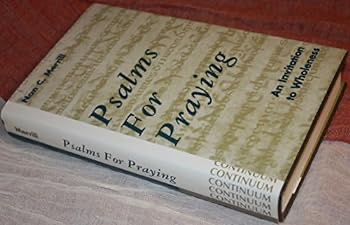
I’ve found Nan C. Merrill’s, Psalms For Reading: An Invitation to Wholeness helpful. I feel a bit guilty with the contrast between her and the original…but that’s what a paraphrase does. She helps me ‘listen to the Voice of Silence that speaks within” my own soul. In her Preface she assures folk that she is “in no way meant to replace the well-loved, still meaningful, and historically important Psalms of the Hebrew Scripture.” Rather she created “a companion, a dialogue, if you will, of one age speaking with a later age.” When I figure it out how to link a pdf to this blog, I’ll include a link to her version of Psalm 55. I’d be interested in what your heart heard as you read it. Here’s a nice Celtic musical version – https://tinyurl.com/3kpkz42k Now to the Lectio Divina, I prayed this morning.

Psalm 55

Lectio – words that stood out for me at first reading – too much noise and clamour of the enemy … so I went to Nan C. Merrill’s version (see above) and heard…

– I offered up my fears to the Beloved, and Love, heard my cry; I sought the one who ever listens; once again, I knew Love’s presence.

Meditatio – personal application – fears desensitizes one to Love’s presence – along with other things, substances…strong emotion, ideas, pain, etc. It happens and Love is always there…we live and move and have our being, in Love – like the air we breathe or water which fish breathe, sort of. Also I changed Merrill’s paraphrase because I like the present tense of “knowing” the Love…

Oratorio – prayer — Thank you Love for your presence in my life…that pretty constant sense of being in love with you. It brings so much comfort and peace. When I feel loved it’s so easy to love others. I know you forgive me when I get distracted. Please help me to stay aware of our love. Thanks.

– then I heard … no prob

Contemplatio — took this and my life into Centering Prayer


Posted in Uncategorized | Tagged , , , , | Leave a comment

Lectio Divina Monday 27may24

Wednesday 27may24 / 0830 / cell / 0

Psalm 1:

Lectio – words that stood out for me at first reading – counsel meditate prosper perish

Meditatio – personal application – these words made me think that who I listen to and how I listen influences the direction I face / go; towards the light or towards the dark.

Oratorio – Love may I find my delight in being grounded in you alone. Thanks for loving me and granting me the sense of loving you.

– scriptures from app: Lectionary – Common Worship: Services and Prayers for the Church of England, Church House Publishing, Aimer. NRSV is used for scripture except for Psalms which are translations from 2000 Common Worship psalter.

Posted in Uncategorized | Leave a comment

What my heart heard in the monastery… graces / gifts / lessons I received … 

There were many things I learned while part of OCL that will remain with me and feed my soul for the rest of my life. But before I ramble on, I wanted to mention something significant I learned / heard / rec’d during the spiritual direction session I mentioned in the last blog. It was almost a  ‘duh’ moment – with Love’s big smile – I heard, “you’re still not part of a religious order after 70 years? Maybe  that’s a hint that it’s not to be.” Okay … that made sense … I got the message that I don’t have a monastic vocation, whether ancient or 21st century. It’s a good awareness to rest in. It is slightly disappointing – cause I was going to try another order / community that combined the spirituality of Cistercians,

Benedictines and Franciscans in New York – Center for Spiritual Imagination – https://www.spiritualimagination.org/monasticism/  thanks to Paul Swanson, Senior Program Designer @ CAC and @ https://contemplify.com . Blessings on them all. That “word” I heard that morning, was also a gentle reminder that my soul needs community; companions for the journey. I’ve been given / graced with a great group of folk, Grain of Wheat Church-Community and I think it’s time to be more intentional, whatever that might look like, to rest, study, labor and pray with them for the foreseeable future. 

Those four things – rest, study, labor, prayer were the 4 rhythms of life that OCL uses in continuity with traditional monastic communities. They were helpful guides during my time in the monastery and will continue to help me keep track of important ways of being / doing on the journey.

I think it’s important to explain some of my discernment in joining OCL before I write any more about the gifts from the monastery. Which, by the way, wasn’t quite as profound as James Finley’s experience, but important to my faith development. Jim writes books – I recommend them all, especially his latest … I only write blogs. Anyway, it took me awhile to decide to enter the monastery primarily because I didn’t want to appear super-spiritual to others, especially my friends. I’ve come to realise over the years that I have a mostly unconscious inner need for the approval / esteem / affection of others. This has a greater impact on me than I’m usually aware of. That’s why the Welcoming Prayer and Centering Prayer are so important to my journey – keeping me grounded in Love rather than my ego’s need for Affection, Power & Control and Security – Keating’s false programs for happiness. My desire to follow Love’s way has become more powerful than my fear of people thinking I’m weird or super-spiritual. And it’s all grace. I wouldn’t even have that desire except for Love. I haven’t figured out why it’s stronger in some than others. When I figure that out I may have to write a book. Anyway … a couple years ago, following my #1 discernment question / prime directive, of the time – “will _____ (in this case, joining OCL) help me experience more of Love?” I decided to do something fairly radical to open myself more to Love – join a religious order. I expected the intentionality of monastic spirituality would give me a deeper experience of Love. As mentioned in the previous blog somehow that discernment question changed from primarily a head thing to more of a heart thing. The question now is – “does this _____ feel like a loving thing to do?”  Anyway acknowledging the fear of rejection of people is a gift the monastery gave me, before I even joined. I still sorta care what others think but not as much. Taking the radical step to join OCL freed me a bit from the shadow of that desire. Now a days, I feel if my decisions help me be more loving, I’m good.

Another gift from the monastery is the wonderful folk I’ve met while there during various stages of entering OCL – foundations of contemplation with Sister Dixie, OCL and friends (Nov-Dec’21), postulancy (Jan-Aug’22), and as a novice (Sep’22-May’24). An expectation of being a novice was to be part of a formation group. There were four novices in Winnipeg so we actually met in person. I noticed that I  bonded pretty deeply, in a relatively short time, with some of those folks … even over Zoom. That isn’t my usual experience with humans. I’m sure it spoke to where they were at as much as where I was. Maybe the desire to notice and nurture love opens one to more heart to heart stuff happening. I’m grateful to the monastery for introducing to me to those younger folk seeking to know and nurture Love in their lives, so intentionally. I’m left with a deep hope for America, this world, the church and myself. The Spirit of the Living God is active and present in the world, despite the news. Who knew. And I may even be able to connect with folk in this crazy world; which seems to separate us from nature and each other rather than connect us – the blessing and curse of technology. I’m starting to preach, not my vocation, so back to the monastery…

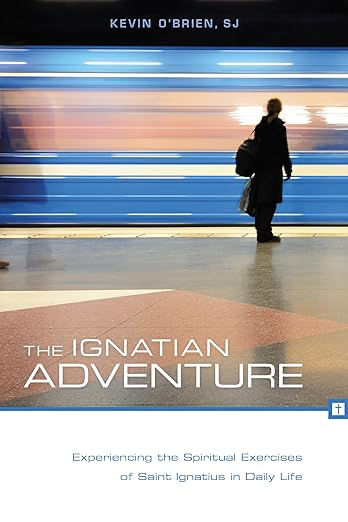
Another expectation of novices was to was to do the Ignatian Spiritual Exercises, something I’d thot about for years, but never had enough motivation – now I did. I spent 32 weeks going  through the prayer meditations laid out in Kevin O’Brien’s, Ignatian Adventure – every day for an hour, including imaginative prayer, journalling, and meeting weekly with my spiritual director. I’m glad I did it even though I didn’t experience anything too profound or life changing – yet. One thing I learned / experienced was a new understanding and appreciation of Jesus, a gift I’ll carry the rest of my life. If you want to know more I’m always open for chatting over breakfast or a beer. I did appreciate the exercises so much I spent another 9 months and a wack of cash learning how to accompany folks wanting that prayer experience – with Brother Brian Hohmeier, OCL as a teacher https://www.orderofthecommonlife.org/ase . I grateful for the training which I believe is helping me be a better spiritual director / companion. Another gift of the monastery. 

I’m sure there are other ways the monastery helped me notice and nurture Love in my life but I’ll leave it here for now. As I did my final edit I realized that one of the reasons I wanted to add this blog to the record of my separating from the order, was my need for affection and in a more positive light … my sensitivity to others feelings – and a tendency to over think things and … I could probably find more reasons if I thought about it more. I want to leave on as positive a note as possible while being open about my reasons I outlined in my 2may24 blog, in that weird third person way. Thanks again for reading – as usual comments and questions are welcome. Blessings on us all as we find ways and companions to help our souls, minds and bodies notice and nurture the presence of Love in all we say and do. Here’s to joy in the journey. 

Posted in Uncategorized | Tagged , , , , , | Leave a comment

Leaving the monastery…

There is a guy who’s pretty sure he’s been aware of a God all his life. He grew up in a pastor’s home but didn’t like all the rules that came with the God stuff he was hearing in Sunday School and summer camps. He decided not to follow his parents religious path and struck out on his own for 3 years or so and then with support of his sister’s friends, he decided it was only fair to try Christianity for three years, after all he knew the rules. A few months into this experiment he had the profound spiritual experience of being aware that Jesus was a real person and he needed to take Jesus and the Jesus way seriously as he journeyed the road of life. He decided to learn more about Jesus and the Bible and started down the road of Bible College study for a few years. During that time he learned that God is love and that he was primarily created to receive that Love and then worship, serve and do stuff for God. “Whatever helps me to experience Love” became his guiding principle on his life journey / spiritual pilgrimage.

Being open to experiencing Love included looking for a life companion, whom he met, married and had children with and now grandparents with. Seeking to experience Love led him to an intentional Christian community to journey with. Along the way he learned about and practiced a contemplative spiritual life at a monastery close to his home. There he trained to be a spiritual companion / spiritual director which gave him opportunities to exercise his primary gift / vocation of listening so others have an experience of Love.

OCLlogoAfter retiring from active employment he found a monastery / religious order which helped people notice and nurture the love of God. He joined the religious order as a novice and sorta moved into a virtual monastery. There he experienced good teaching and meaningful relationships with many other novices moving into the monastery. It was a wonderful place to study, pray, rest and labor together. Everyone was welcome to follow the 12 commitments / the rule. Then one of the commitments was changed, for clarity. They were informed that the order’s understanding of the Consecration of Love in Celibacy and Marriage was only for partners of opposite biological sex. The monastery was a safe place for celibate single folk, including those with same-sex attraction, but closed to gay folk invited to a life-long consecrated relationship. Outside the monastery there was no issue with “married” gay folk but in the monastery, they weren’t allowed. This caused a deep tension in this pilgrim and he spent many hours in conversation with Love and others – in the monastery and outside. He was aware that a monastery needs to have walls to keep the roof on and doors to keep stuff (good and bad) out & in – safety. However he wasn’t totally comfortable in a place that was so exclusive. And yet he knew he had be guided there by Love so what the heck was he to do.

A year or so previous to this change in the order, our pilgrim had experienced a profound shift in his “prime directive” / discernment question – what will help me experience Love more? He no longer felt the need to ask that question because he now felt so in love with Love that all he needed to ask was – what is the loving thing to do… for Love, for himself, for others, for the world.

Part of the expectation of novices in the monastery was to get together each month and talk about one of the commitments. A discussion with his small group about the commitment to Consecration of Love in Celibacy and Marriage was spent celebrating how much a gift from Love a marriage partner was. This discussion emphasized a way Love loves many folk, in or out of a monastery. In his next conversation with his spiritual director he was asked, “what does God want you to do?”… and as he opened his mind, heart and soul to whatever the loving thing to do was … in that sacred moment he came to see that for him the loving thing to do was to stay open to love and not close any doors to anyone. That meant leaving the monastery, separating himself from the order. So with a sad and contented heart he left the monastery and is now a more mobile spiritual pilgrim again. He knowswindingroad he need companions for the pilgrimage and is committed to spending more time with his present faith community. He feels a peaceful invitational energy in his soul that, despite the lack of certainty, there’s much love to live, so on he goes.

As usual questions or comments are welcome. Blessings on your pilgrimage, where ever you are and whom ever you’re with.

Posted in Uncategorized | Leave a comment

Does Psalm 22 teach that God abandoned Jesus?  

Looks like I’m closing Lent ’24 with a blog too…miracles do happen. Most of this blog is material copied from the transcript of a video posted for training in the Apprenticeship in the Spiritual Exercises taught by Br. Brian Hohmeier, OCL. It was for people, including myself, taking the training to accompany folk wanting to do the St. Ignatian Spiritual Exercises / prayer retreat. Take that into consideration as you read it. I’ve received Brian’s blessing to post it with direct quotes in italics. Let me know what you think. 

It might be helpful to explain that St. Ignatius originally intended for this prayer retreat to be done in 30 days with the meditations divided into 4 weeks.  Nowadays the most common way of going through the Exercises is a “retreat in daily life,” also known as the 19th Annotation, which involves an eight-month program of prayer and meetings with a spiritual director, following St. Ignatius’s pattern of meditation, contemplation, and scripture reading. So the weeks are referred to as movements … 4 of them plus some opening weeks of orientation and preparation. 

In this training video Brian begins by reminding us students that the Spiritual Exercises help us be present to Jesus as Jesus has been present to us in the context of this story in which God has such love for God’s creation that God entered into it, right into the middle of its disorder and dysfunction and darkness, courageously united Godself to it in the Incarnation of Jesus and took on its weakness and its poverty, in order to tend its wounds and suffer its violence and take on its death and, only through this, give it life and restore it to relationship with God. 

And over this journey, the primary dynamic, the absolutely most important movement and grace we can desire through all of this, is love—that we would come to fall in love with Christ because in love we find our freedom, and in freedom we find our healing. 

And if we come to the Exercises wanting to know what it is God is inviting us to, the only thing that matters, we find in the end, are the responses that we make freely from love. 

But here, as we enter and move through Movement 3, that love actually isn’t pointing us to any chosen response or discerned resolution but rather only to an experience what we can call a “mystical identification” with Christ in his humanness, in a space of suffering in which we find him present to our own suffering and in which he invites us to be present to, to witness, to love him in his own suffering. It’s a place where we become one with him because he’s no longer the completely otherworldly mysterious alien superhuman inconceivable God made flesh; he’s the Man of Sorrows, fully human, fully human, like me, almost too much like me. How can I not understand him? How can I not know him? How can I not love him in that humanness. And this is the journey we take in Movement 3, seeing Christ’s vulnerability in the Last Supper and his agony in the Garden and his loneliness in the trial and in the act of being crucified and lifted up on the Cross. 

Through all of this, we are beckoned, we’re desired, we’re called just to remain with him. 

And yet in the midst of all this, it’s Matthew 27:45 that we find Jesus on the cross and we read these words: “My God, my God, why have you forsaken me?” which could cause us to ask, Did God abandon Jesus? There’s a lot of theology we can unpack here, …and Brian says that he believes this is a critical question for us to be aware of at a critical moment in the retreat for ourselves and retreatants. What follows spoke to my soul and spoke to the questions I had ignored for many years. Questions my Mom reminded me of in her Good Friday text to our family…the prime motivation to write this blog.

For many of us in the West, we may have been taught, maybe in theological sermons, maybe through hymns, that because Christ takes on sin in the moment of the crucifixion, God the Father turns away or hides His face from him. And this, the idea goes, is why Christ would of course cry out, “My God, my God, why have you forsaken me?” But I (Brian) think that there are severe, severe theological and biblical or exegetical issues with this. And even more immediately, I want to draw our awareness to the disjunction or the dissonance between the story we’ve been journeying in, a story about God’s presence to all aspects in all parts of ourselves in this work of ongoing creation that embraces and works with and creatively interweaves our disorder into a redeemed creation, between this picture and the picture of a God who, when things are at their ugliest, withdrew from Jesus at the very moment we most identify with him. I mean, is this the “mystical identification” we’ve been setting people up for, if they’ve allowed themselves to receive that invitation to just remain with Jesus, to enter that darkness because Christ their love is there and that’s enough, only to find that when Christ is most human, most like them, God leaves the room? Are they becoming united in love to a Jesus that God then abandons? I want to be absolutely unequivocally clear in saying no. I believe God did not abandon or turn away from Christ, not for a solitary moment. 

I think this idea that the Father turns away from Christ, which we can actually say is a relatively new idea within the larger landscape of Church history doesn’t make sense in the larger story—and not just the story of the gospels but that told through the whole of scripture, shaped by the gospels and what it shows us, what it performs for us, about how God loves, how God is willing to love. 

Read Psalm 22 in conjunction with this scene. Because when we allow Christ to signal us to Psalm 22 (that’s what he’s doing in reading that verse out of Psalm 22—this was a pretty common way to cite a passage of Scripture in Jesus’s context, since they didn’t have verse numbers at this point, you just give the first lines and it signals the rest of the passage), here’s actually what we hear from the rest of the psalm as it continues. It goes: 

“But You, O Lord, do not be far away. Oh my help, come quickly to my aid. Deliver my soul from the sword, my life from the power of the dog. Save me from the mouth of the lion, from the horns of the wild oxen, You have rescued me. I will tell of your name to my brothers and sisters. In the midst of the congregation I will praise You. You who fear the Lord, praise Him. All you offspring of Jacob, glorify Him. Stand in awe of him all you offspring of Israel.” 

This is the same psalm from which Jesus quotes or recites “Why have you forsaken me?”—a little later, this the psalm says: 

“From You comes my praise in the great congregation. My vows I will pay before those who fear Him. The poor shall eat and be satisfied. Those who seek Him shall praise the Lord. May your hearts live forever!” 

Friends, I (Brian) think this is so, so important. It’s so important for us to get; it’s so important for our retreatants to get if they don’t. There is no abandonment in God. 

Instead, what Matthew shows us, what it uses Psalm 22 to show us, is that in the most despairing experience, when it feels like God has abandoned us, has turned God’s face from us, there is a reality underneath that, running deeper than that, that can hold us fast, that God does not turn away, does not shrink from us, doesn’t blink, but indeed is working, is accomplishing something in us as God hears our cries—which means God is present to us. 

And if God could bear to see the Son suffer, how much more can God withstand our suffering. If God could bear to be present in the face of all the sin and all the violence of the world heaped upon Christ in a single moment, how much more can God look upon us, in our sin, in our disorder and still love us? And finally, if we allow ourselves to become mystically united with Christ in suffering, we are right there in that place that God would not abandon, consequently united with the Father, who never abandons him, who looks on him and loves him. 

Yes the prophet Habakkuk did indeed write: 

“I will stand at my watchpost, and station myself on the rampart; I will keep watch to see what he will say to me, and what he will answer concerning my complaint.” 

I won’t deny that that is in our Bible. But Habakkuk finishes that same thought, that same verse, as complaint to God, saying: 

“Though the fig tree does not blossom, and no fruit is on the vines; though the produce of the olive fails, and the fields yield no food; though the flock is cut off from the fold, and there is no herd in the stalls, yet I will rejoice in the Lord; I will exult in the God of my salvation. God, the Lord, is my strength; he makes my feet like the feet of a deer, and makes me tread upon the heights.” 

This is the Gospel. God’s eyes are not too pure to behold evil but, instead, by looking on us in love, God purifies. And God will not look away from the one God loves. Friends, this is everything. It truly is. So Brian encourages his students to hold this conviction for our retreatants, that we can carry it for them. 

And, in good spiritual director fashion he concludes, if this is something that we don’t believe, then let’s spend some time with that. No judgement or criticism just a desire to be open to what Love is thinking of and exploring why we think the way we do and our experience of that. When I first heard Brian his words spoke to my heart and soul. It was somehow comforting to hear him making sense of questions about the crucifixion that I ignored whenever they came up. His thoughts are in contrast to much of what I was taught and read (see McCall) and are more consistent with my present understanding of the Love that created and sustains the universe. What exactly happened that day on Golgotha is still mostly mystery to me … despite the theologians, hymnodists and preachers having it all figured out. The one thing that isn’t mystery is the love of Creator that I experience AND it is mystery (o those spiritual paradoxes) Like Steve Bell sings “O Love what are you thinking of…that you are mindful of us.”

In our course work for that week Brian also included a scholarly reflection on Jesus “cry of dereliction” by Thomas H. McCall, “Was The Trinity Broken?” in Forsaken: The Trinity and the Cross, and Why It Matters, pp. 13-29. To over simplify McCall’s work, this chapter is a great summary of the modern understanding of the opening words of Psalm 22 which Jesus spoke on the cross. McCall quotes some of my favourite writers and commentators including Jürgen Moltmann, William Lane, Leon Morris. Then McCall contrasts that understanding with older Church teachings and gives a better understanding (IMHO) of why the opening words of Psalm 22 were put in Jesus’s mouth by Matthew and Mark.

Blessings on us all as we sit in this liminal Saturday…contemplating the dark. 

Posted in Uncategorized | Tagged , , , , | Leave a comment